Isa Buzzi Exposes the Merch Mistake Costing Artists Millions
Pickup + Delivery
By Andrew Cargill

For many artists, music alone is no longer the economic engine it once was. Streaming has changed listening habits, but it has also compressed earnings. Touring remains essential, yet tours are expensive to produce, expensive to staff, and expensive to move from city to city. In that environment, merchandise matters more than ever.
Merchandise is not just a nice extra. It is one of the clearest ways artists can increase margin, deepen fan connection, and turn live demand into meaningful revenue. The problem is that much of the industry still operates merch in a fragmented, reactive way. Stock is guessed months ahead. Sizes are allocated without enough data. Products are pushed through crowded venue stands. Fans queue, settle for second choice, or walk away altogether. When forecasting is wrong, artists either lose sales or carry waste.
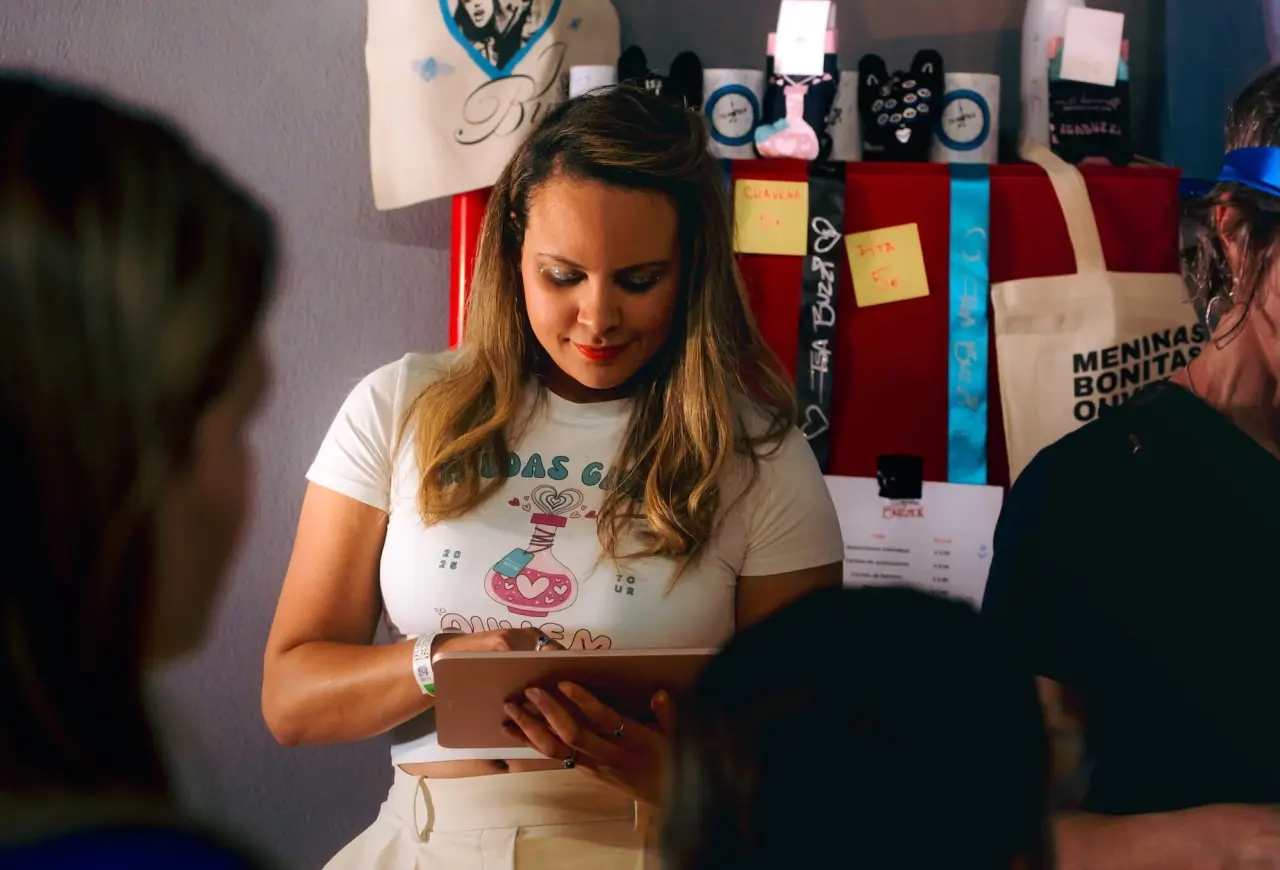
That was the wider backdrop to Zapiet's collaboration with Isa Buzzi. What started as a fashion partnership quickly became something more revealing: a real-world view into just how much opportunity exists when artists modernize the way they sell merchandise.
An unexpected collaboration that revealed what artists are missing behind the scenes
This case study begins with a collaboration, not with a software rollout.
Through Emili Horncastle British Atelier, Zapiet's luxury fashion brand, Isa Buzzi launched exclusive tour merchandise for her international tour. The partnership brought together music, fashion, and commerce in a way that felt fresh and highly relevant to her audience. The products were elevated, brand-led, and designed to feel like more than standard concert merch.
That was important because it proved a central point. Fans do want premium, artist-led products. They are willing to buy when the offer is compelling.
But as the collaboration progressed, Zapiet gained a deeper understanding of the opportunity behind the scenes. Like many tour setups today, the operation was not yet designed around pre-orders, scheduled pickup, or location-aware inventory planning.

These are not just operational features. They directly impact revenue. Pre-orders allow artists to capture demand before the event, reduce missed sales, and produce the right products in the right quantities. Scheduled pickup removes friction on the day, shortens queues, and increases conversion. Location-aware inventory planning ensures the right products are available in the right cities, aligned with local demand.
In this case, fans were largely buying on the day, pickup was handled in the moment, and inventory visibility across locations was limited.
The result was clear. Demand was strong, but there was a significant opportunity to capture more of it through better planning, earlier engagement, and a more connected system.
That is exactly what made the opportunity so clear.
The Billie Eilish Merch Mistake the Music Industry Can’t Afford to Repeat
One of the clearest examples of what goes wrong when merch demand is forecast poorly came from reports around Billie Eilish tour merchandise, where hundreds of thousands of shirts were said to be at risk of going to landfill. The figure widely discussed was around 400,000 unsold shirts.
That story matters because it reframes the merch conversation. The problem was not that Billie Eilish lacked reach, relevance, or fan demand. She had all three at extraordinary scale. The problem was that merchandise planning in live events still too often relies on estimation rather than verified demand.

When stock is produced too far ahead of real purchase intent, mistakes multiply. Teams may overproduce the wrong sizes. They may send the wrong mix of products to the wrong cities. They may assume uniform demand across locations even though weather, venue profile, audience age, and local preferences can change what sells. One stop may sell out of hoodies immediately while another ends the night with rails of leftover inventory. The same operation can simultaneously lose revenue and generate waste.
That is what makes the Billie Eilish example so powerful. It is not only a sustainability story. It is also a profitability story, an operations story, and a brand story. Overproduction ties up cash, increases transport and storage costs, and puts teams in a position where unsold goods become a problem to hide rather than an asset to monetize. Underproduction does the opposite. It creates stockouts, disappoints fans, and leaves money on the table.
For artists and managers trying to build modern businesses, this is the real lesson: merch cannot be treated as a guessing game. Better pre-sales, better historical analysis, better demand prediction, and better fulfillment design are not operational luxuries. They are commercial necessities.
What the live music merch model still gets wrong
The traditional model assumes fans will arrive, queue, browse, decide, pay, and leave happy. In reality, that sequence breaks down constantly.
Queues discourage purchases. Connectivity issues can interrupt payments at the exact moment demand peaks. Fans who traveled specifically to see a show may find the product they wanted is gone, or their size never arrived. Multiple merch points at a single venue may not have clear shared visibility, meaning one stand is out of stock while another still has units available. Teams miss the chance to redirect the customer, reserve stock elsewhere, or convert the sale through a collection flow instead of losing it.
Even the product mix is often based on broad assumptions rather than local knowledge. A colder location may need more hoodies and outerwear. A warmer location may sell through lighter apparel more quickly. Some fanbases will skew toward collectible items. Others will favor wearable staples. When those nuances are ignored, the result is poor allocation, unhappy fans, and avoidable waste.
All of this is made worse when artists treat online and physical sales as separate worlds. They are not. Fans do not think that way, and neither should the systems behind the brand.
Where Shopify gives artists the foundation
This is where Shopify deserves a strong mention. For artists and teams building modern commerce operations, Shopify already provides a large part of the foundation out of the box. It offers the storefront, payments, product management, inventory tools, and operational infrastructure needed to run serious ecommerce.
That foundation extends beyond online. With Shopify POS, the same system can be used to sell merchandise anywhere inside a venue. From the main merch stand to smaller pop-up points across an arena, every transaction is connected back to the same platform in real time.
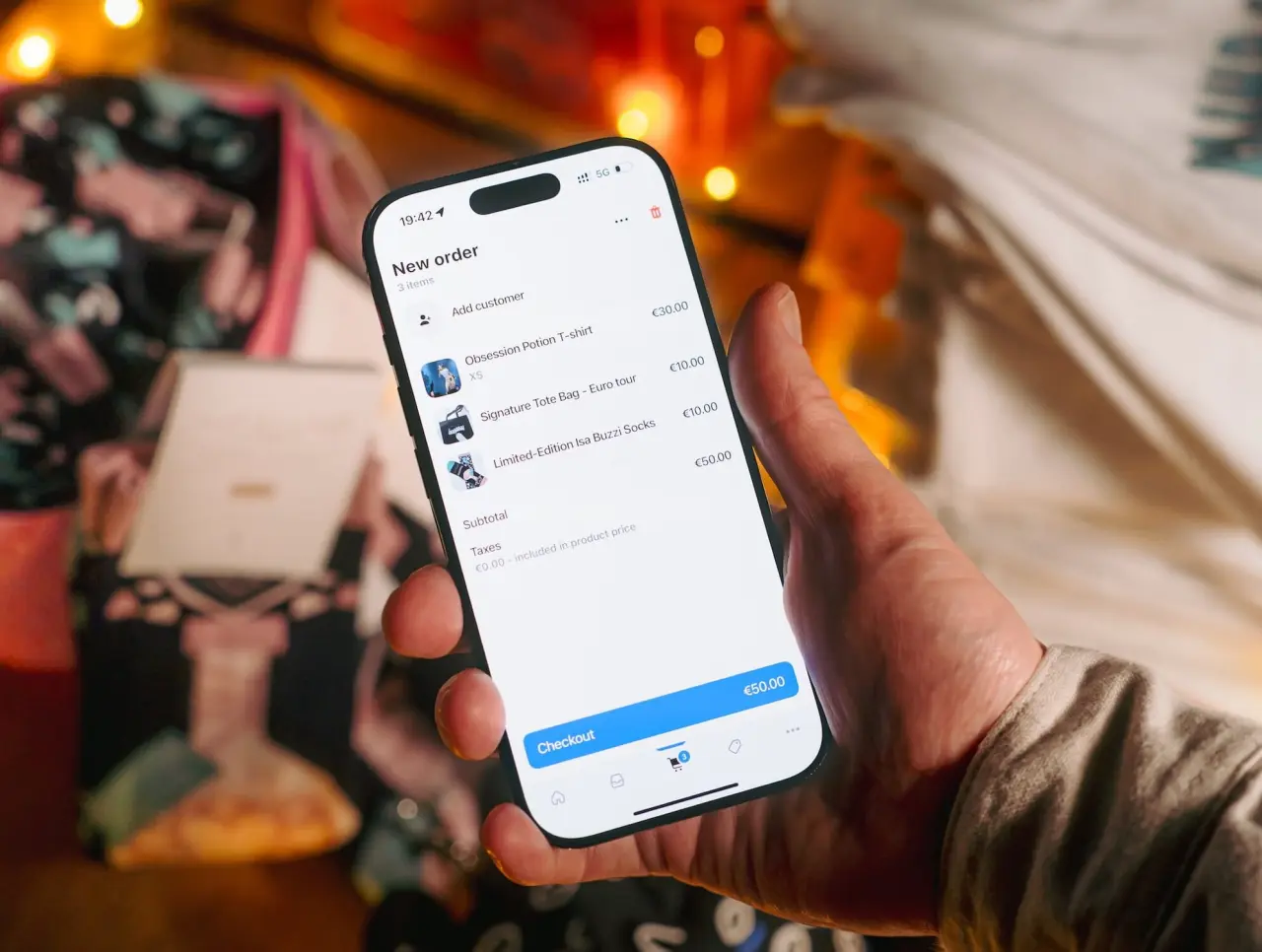
This changes the dynamic entirely. Instead of relying on a single, overcrowded merch desk, artists can distribute selling points across the venue, reducing queues and capturing demand at the moments it matters most.
That matters because artists do not need to start from zero or juggle disconnected systems. Shopify gives them a reliable commercial engine and a unified place to manage products, orders, inventory, and customer experience across both online and in-person sales.
But live events create a layer of complexity that standard ecommerce alone does not fully solve. A concert is not just an online checkout. It is a time-sensitive physical environment where fans move between spaces, demand spikes quickly, and missed moments often mean missed revenue. Inventory needs to stay accurate across multiple selling points, not just a single store, and teams need clear visibility into what is selling, where, and how fast.
That is where Zapiet - Pickup + Delivery takes things further. It allows artists and their teams to tailor the customer journey around how fans actually buy and collect merchandise in the real world, whether that is pre-ordering online, picking up at a specific location inside the venue, or coordinating inventory across multiple collection points and event dates.
How Zapiet turns merch into a growth engine
The clearest commercial upside is pre-ordering.
When fans can buy before the event, the artist gets stronger signals of real demand. That improves production planning. It reduces the chance of carrying the wrong sizes. It can lower transportation waste because stock is moved with more confidence. It gives fans certainty that the item they want will actually be there.

Scheduled pickup adds another layer of value. Instead of sending every fan into the same on-site queue, artists can offer collection before the show, at a chosen time, or from a chosen location. That reduces pressure on venue stands and makes the experience feel smoother and more premium. It also changes behavior in a powerful way: fans can arrive already knowing their purchase is secured, collect it quickly, and wear it during the concert itself. That turns merch from a rushed transaction into part of the live experience.
Better inventory visibility matters too. At a venue with multiple sales points, Zapiet makes it possible to think beyond a single stand. If one location is out of stock, the answer does not have to be a lost sale. The team can redirect the fan to another location, offer a different collection point, or structure the flow so the order is still captured.
From a conversion perspective, this is the key shift. Instead of asking, “Can we sell this item right now from this exact table?” the system asks, “How do we still win this sale and fulfill it smoothly?” That is a much more profitable mindset.
Why this matters for fan satisfaction
Fans do not experience merch as a back-office problem. They experience it emotionally.
They remember whether they got the item they wanted. They remember whether the process felt exciting or frustrating. They remember whether the artist experience felt elevated and intentional or disorganized and rushed.

A fan who pre-orders the right size, arrives at the venue, collects quickly, and wears the item into the show feels taken care of. A fan who queues for twenty minutes only to discover the preferred item is sold out feels let down. Those moments shape perception.
For artists, that matters beyond the single transaction. Fan satisfaction feeds repeat buying, social sharing, and brand affinity. In other words, operational excellence becomes part of the artist's marketing.
What the Isa Buzzi collaboration taught us
This first stage with Isa Buzzi was valuable precisely because it was not yet the finished picture. It revealed the gap between a strong merchandise concept and a fully optimized merch operation.
The collaboration proved that compelling products and strong artist branding can create demand. It also showed how much more value can be unlocked when that demand is supported by pre-orders, better forecasting, structured pickup, and connected inventory visibility.
That makes this story an ideal starting point for a series. It is the moment where the opportunity becomes visible. The next chapter is where the operational transformation happens.
What artists and managers can take from this
If you are an artist, manager, or live events team selling on Shopify, the message is simple. You may already have the audience. You may already have the products. You may already have the platform. The missed opportunity is often in the experience between interest and collection.
Zapiet - Pickup + Delivery helps close that gap. It gives artists a way to sell earlier, forecast smarter, reduce venue friction, improve inventory allocation, and create a more seamless experience for fans. It does not replace Shopify. It extends what Shopify makes possible for physical, time-sensitive commerce.
For artists trying to grow revenue without increasing chaos, that matters. For artists trying to reduce waste while improving service, it matters even more.
What comes next
The future phases of the Isa Buzzi story are where these gains become measurable. Pre-orders ahead of tour dates. Size demand captured in advance. Pickup before showtime. Better inventory movement. Fewer lost sales. Less guesswork. A stronger fan experience.
That is the bigger point of this case study. Zapiet did not just participate in a collaboration. It spotted an untapped opportunity in tour merchandise and identified a clear path to help artists monetize it better.
The music industry does not need more merch. It needs smarter merch operations.
Artists already use Shopify to power modern commerce. Zapiet - Pickup + Delivery helps turn that commerce into a smarter live-events experience.
Offer pre-orders. Let fans choose the right size in advance. Reduce queues. Coordinate pickup. Improve inventory planning. Minimize waste. Capture more sales.
If you are serious about making merchandise more profitable and more fan-friendly, Zapiet - Pickup + Delivery is the next step.
Share this post