What we learned at Shopify DotDev 2026
Insights
August 11, 2026
Olya Kryvonos

This year, one theme ran through almost every session: AI isn't a feature Shopify is bolting onto the platform. It's reshaping the platform itself, for the developers building on it and for the AI agents that will increasingly shop, browse, and transact on it too.
Here's what stood out.

The Automotive Building in Toronto, home base for two days of DotDev 2026.
Agentic commerce stopped being theoretical
The Universal Commerce Protocol, co-developed by Shopify and Google, was one of the defining announcements of the event. UCP lets AI agents discover products, authenticate shoppers, build carts, and complete checkout using standardized protocols instead of a traditional storefront visit. It's already powering shopping experiences inside Google's AI products, and it's built on MCP servers that support the whole transaction lifecycle.
The numbers Shopify shared back this up. AI-referred shoppers convert nearly 50% better than average. Average order values from AI-driven traffic are 14% higher. And AI-driven orders have grown 13 times year over year.
For merchants and the partners building for them, the implication is bigger than "another sales channel." Product data is no longer just content displayed on a webpage. If an AI agent searches for a product with a specific attribute and that attribute isn't there, structured and complete, the product may never surface at all. Category metafields, Shopify's Standard Product Taxonomy, and platform-level business logic through Shopify Functions all become engineering priorities, not just merchandising ones.
Sidekick, Shopify's AI assistant for merchants, is following the same trajectory. Weekly active stores using Sidekick have grown 4 times year over year, and opening it up to app developers through Sidekick App Extensions means merchants will increasingly run parts of their business through conversation instead of dashboards. That's a real opportunity for every app in the ecosystem.
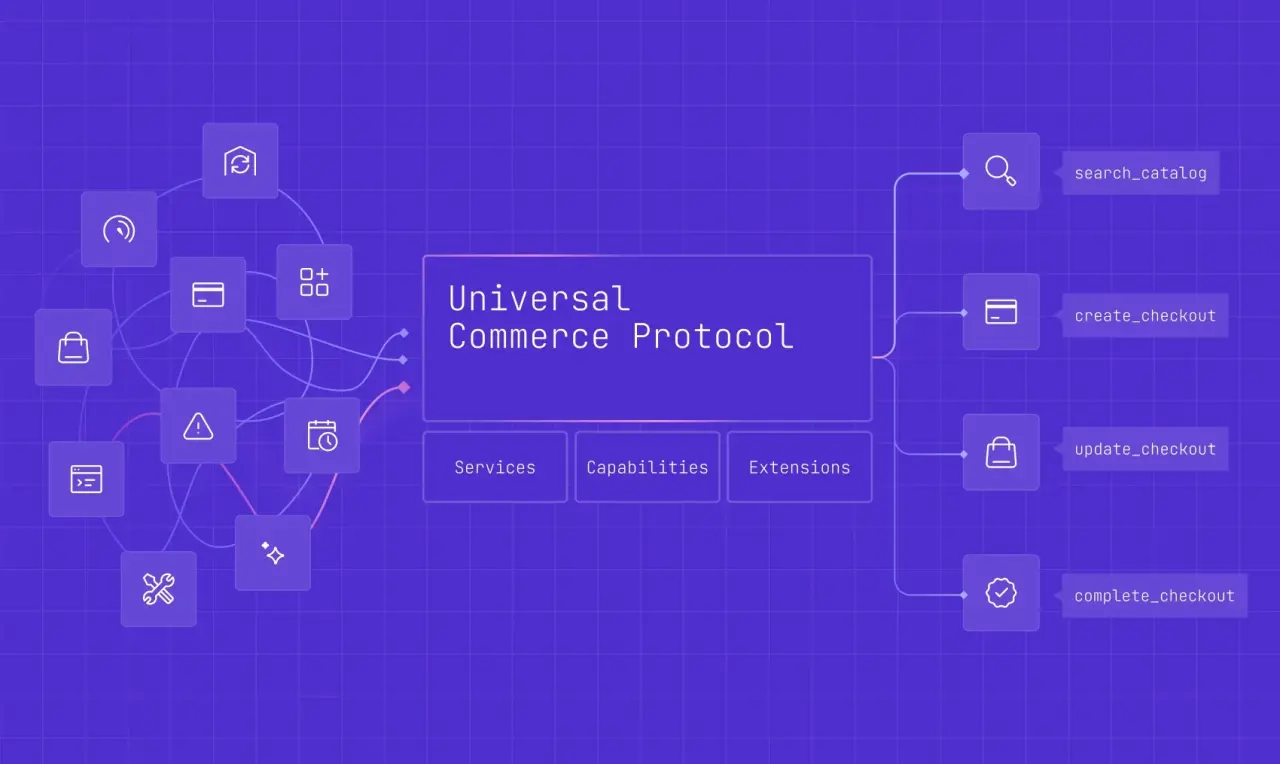
How UCP structures a transaction: search, checkout creation, updates, and completion, all through standardized actions AI agents can call directly. (Source: Shopify)
Liquid isn't going anywhere
Given how much of the conversation centered on AI and headless, the most notable architectural news might have been Shopify doubling down on Liquid.
Typed blocks, partial rendering, better component composition, and stronger contracts through {% doc %} and Theme Check are all still in developer preview, so it's worth treating them as direction rather than finished product. But the intent is clear: move more page structure back into readable Liquid, reduce how much custom JavaScript a storefront needs, and make themes easier to maintain.
The more interesting part is who this is actually built for. Explicit component contracts, standardized actions, and stronger validation don't just help human developers. They make themes dramatically easier for coding agents to read, modify, and validate too. Shopify isn't just improving Liquid. It's making Liquid legible to AI, the same way it's making product data legible to shopping agents.
Headless gets an easier front door
Shopify's new partnership with Vercel gives developers a more direct, officially supported path for deploying Next.js storefronts, connecting stores, and managing credentials, without changing the underlying headless architecture.
Combined with Hydrogen's evolution from a framework into more of a toolkit (a plain JavaScript core, lighter framework bindings, and support for multiple runtimes and hosting providers, all still in developer preview), the message is consistent: headless is becoming less of a long-term architectural commitment and more of a flexible option teams can pick up, adjust, or migrate away from as needs change.
Shopify and Vercel are rebuilding Hydrogen for faster storefronts. (Source: Vercel)
The plumbing got a serious upgrade
A handful of less headline-grabbing announcements will matter a lot to teams working under the hood:
- Events, not just webhooks. Shopify's newer Events architecture lets developers define exactly which changes trigger a notification, which fields are included, and how subscriptions are filtered, including new metafield-scoped triggers. That means smaller payloads, less unnecessary API traffic, and integrations that are easier to reason about, at the cost of eventually migrating off older webhook patterns.
- Collections, rebuilt. A new Collections model brings variant-level merchandising, multiple collection sources, and sub-collections, laying the groundwork for AI-assisted merchandising down the line.
- Analytics as a platform, not a destination. New APIs for annotations, embeddable analytics components, and queryable merchant data mean reporting context can live inside the tools merchants already use, instead of a separate dashboard.
- Customer accounts, on a deadline. Legacy customer accounts are already deprecated, and further Customer Account API changes are landing in version 2026-10. Customization now runs through Customer Account UI Extensions rather than Liquid, which matters for any brand with a design-led checkout experience.
- Shipping and inventory, built for scale. Market-driven shipping enters feature preview this year, rolling out to merchants starting October 1, 2026, with full rollout by mid-2027. Expanded GraphQL support for physical inventory, including purchase orders and bins, gives larger merchants a stronger native foundation for ERP and warehouse integrations.
AI discovery: less hype, more fundamentals
Shopify's SEO team used their session to answer the question every merchant is asking: does AI discovery actually matter yet? Their answer was refreshingly grounded. Strong product data, structured content, and solid technical foundations are still what work, AI search surfaces are just another place that same information now gets consumed. There's no shortcut that skips the fundamentals.
A community that keeps showing up
One statistic from the event says as much about Shopify's ecosystem as any product announcement: only 3% of DotDev attendees were first-time Shopify Partners. This isn't a community of people passing through. It's partners who've built lasting businesses together, year after year.
That spirit was on full display at this year's Build Awards, where Shopify recognized partners across four categories: apps, storefronts, merchant impact, and community. We're proud to share that Zapiet's own co-founder, CMO, and Creative Director, Emili Horncastle, took home the 2026 Build Award in the Community category, recognition for a decade spent doing exactly what DotDev is all about: showing up, sharing what you've learned, and building the ecosystem alongside everyone else in the room.
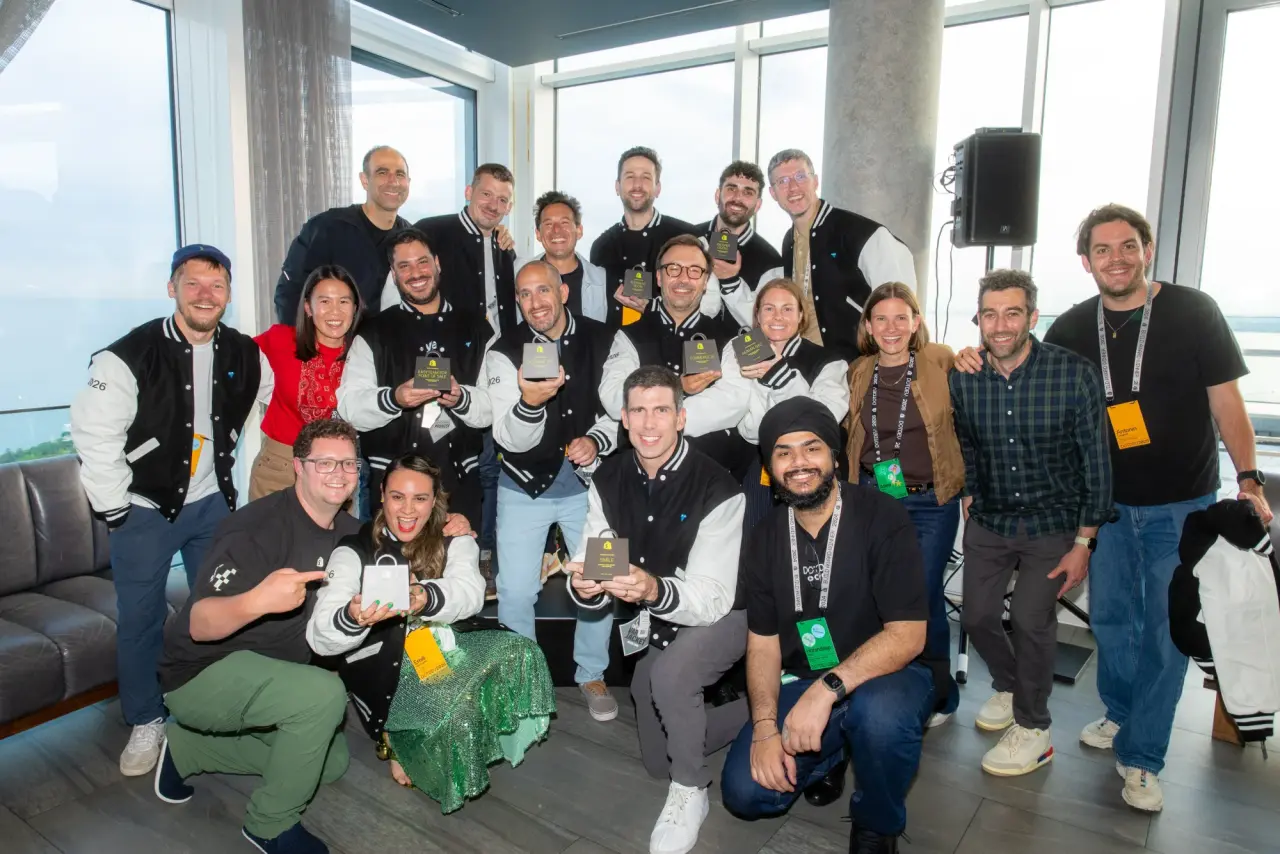
This year's full house of Build Award winners, celebrating together after the ceremony. (Source: Shopify)
The bigger picture
Individually, every one of these announcements solves a specific problem. Together, they point to something larger: Shopify is rebuilding its platform to be legible to two different kinds of intelligence at once. Coding agents that help developers build and maintain software, and shopping agents that discover products and complete purchases on a customer's behalf. Both need the same thing: a platform that's structured, well-described, and native rather than bolted on.
For the next few years, the edge won't come from adding AI features on top of an existing storefront. It'll come from building commerce systems, product data, integrations, and merchandising logic included, that are legible enough for both humans and AI to work with well.
Share this post